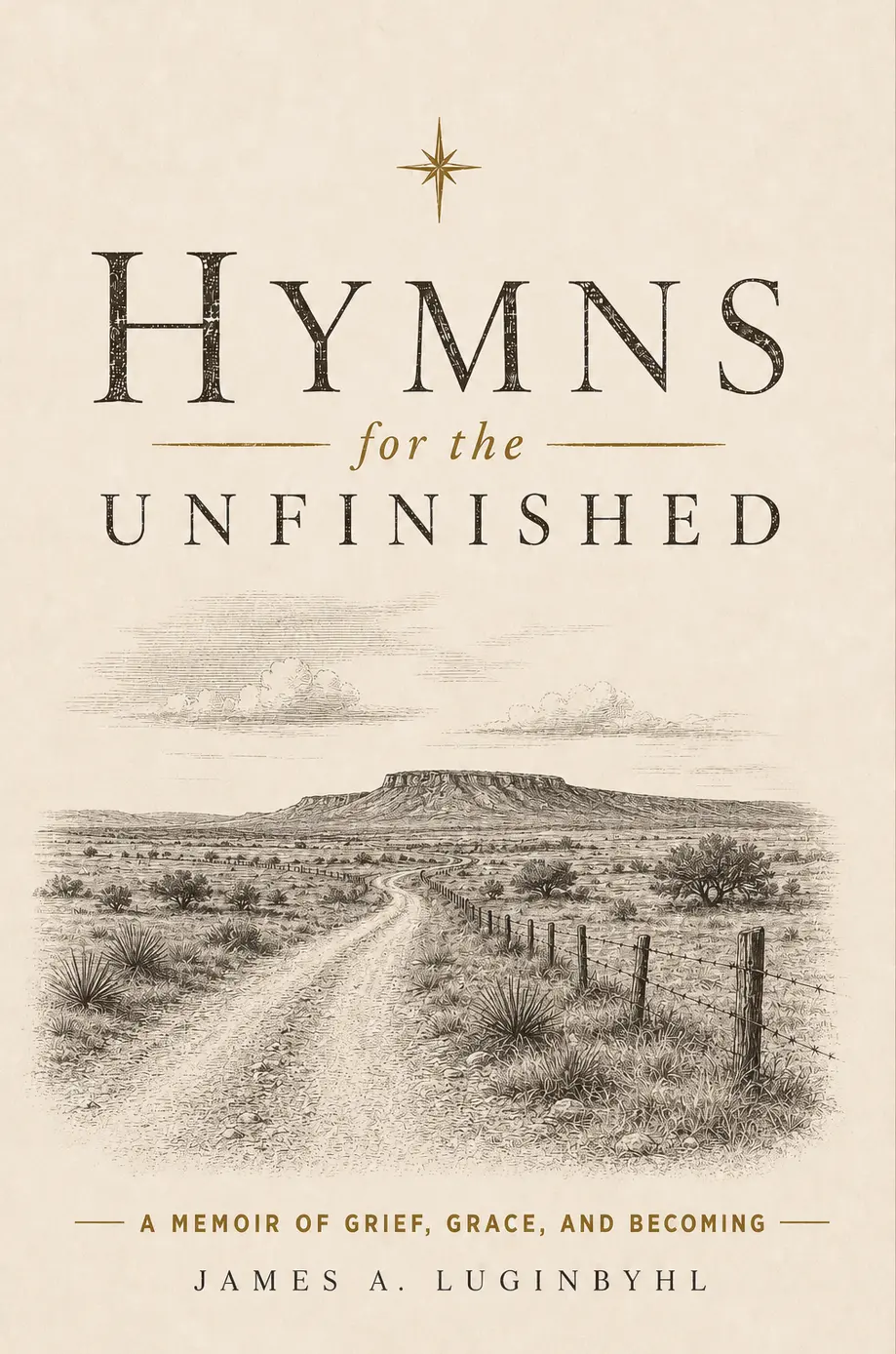
There is a kind of grief that does not know where to sit.
When someone dies, the world may not understand the size of your loss, but at least it recognizes what happened. There is a funeral. People bring food. Someone sends flowers. For a little while, nobody expects you to act normal.
But how do you grieve someone who is still alive?
How do you explain that your child is still somewhere in the world—waking up, laughing, growing older, and becoming someone new—but you are no longer there to see it?
There is no funeral for that.
There is no obituary for the relationship you once had or the future you thought was waiting for you. People do not always know what to say, so they often say nothing. Or they offer an answer that would fit nicely on a coffee mug but cannot carry the weight of an empty chair.
I know this grief because I live with it.
My daughters are alive, and I love them. I do not speak about them in the past tense because they are not part of my past. They remain my daughters. But after a long custody battle, I made the most painful decision of my life: I gave up custody to end the battle for their sake.
That decision ended the court fight. It did not end my love for them, and it did not end my grief.
There Is a Name for This Kind of Grief
Mental-health professionals often call this ambiguous loss: a loss without the certainty or closure that normally helps us understand what has happened. The person may still be physically alive but psychologically or relationally absent. Cleveland Clinic describes ambiguous loss as grieving someone who is alive but feels beyond your reach.
It can also become disenfranchised grief—grief that other people do not fully recognize or give you permission to carry.
Those names will not make the loss disappear. But naming something can keep you from believing you are losing your mind.
You are not foolish for grieving someone who is still alive. You are not weak because a birthday, holiday, photograph, song, or ordinary Tuesday can knock the wind out of you. You are grieving a real relationship, a real absence, and a real future that did not unfold as you expected.
The uncertainty makes this grief particularly difficult. Death has a terrible finality. Estrangement does not. Estrangement leaves the door standing somewhere between open and closed.
You hope because your child is alive.
You hurt because your child is absent.
Both are true at the same time.
You Are Grieving More Than Their Absence
When a child is no longer part of your daily life, you do not only grieve the child you knew. You grieve all the ordinary things that once seemed guaranteed.
You grieve birthdays you cannot celebrate. Holidays arranged around an absence nobody wants to mention. First jobs, graduations, relationships, inside jokes, bad days, good news, and small moments that would sound insignificant to anyone who has never lost them.
You grieve the privilege of being ordinary together.
That may be the part I miss most. Not some grand, cinematic version of fatherhood. Just the normal things: hearing about a day, offering advice that may or may not be wanted, laughing at something stupid, or being present enough to become mildly annoying. That is one of the sacred duties of a father, and I took it seriously.
You also grieve the person you were allowed to be in their life. Parenthood becomes part of your identity. When the relationship is severed, you may begin wondering whether you are still a mother or father at all.
You are.
The shape of your fatherhood or motherhood may have changed without your consent. Your love may have nowhere obvious to go. But absence does not erase the relationship, and powerlessness does not erase love.
Stop Asking Yourself to “Get Over It”
I do not believe grief is something we conquer. I have never awakened to find it packed its belongings during the night and left a courteous note on the counter.
Grief becomes part of the life we are learning to live.
That does not mean every day will always hurt as sharply as the worst day. It means healing is not measured by how completely you forget or how convincingly you pretend not to care. Healing may look like carrying love and sorrow without allowing either one to destroy you.
Some days you will feel strong. Other days a memory will find the one board in the floor that still squeaks. Neither day defines your progress.
You do not dishonor your child by experiencing joy. You do not betray your healing by hurting again. Grief does not move in a straight line, and it certainly does not respect calendars.
Give Your Grief Somewhere to Go
Love that cannot reach its intended destination can turn inward. It can become shame, anger, obsession, self-blame, or despair. That is why this grief needs somewhere safe to go.
For me, writing became one of those places.
I began putting into words what I could not repair with arguments, court filings, explanations, or sheer determination. Some of what I wrote became letters. Some became prayers. Eventually, some became a book.
You may find another way. You might keep a journal, write letters you do not send, make art, walk, pray, meet with a counselor, attend a support group, or speak honestly with one trustworthy friend. The goal is not to perform your grief for other people. It is to keep the grief from becoming a locked room inside you.
Choose carefully whom you trust. Not everyone deserves the whole story. Look for people who can listen without turning your pain into gossip, a legal strategy, a theological lecture, or an excuse to inflame your anger.
You need people who can help you remain human.
Learn the Difference Between Hope and Waiting
For a long time, I thought continuing to live might mean giving up hope. If I adapted to the absence, did that mean I had accepted it? If I laughed, traveled, worked, loved my wife, or built something new, did that mean my daughters mattered less?
No.
You can hope for reconciliation without placing your entire life in a waiting room.
Hope says the story may not be finished.
Waiting says your life cannot continue until someone else changes.
Those are not the same thing.
I cannot control what my daughters have been told, what they believe today, or what choices they will make later. I cannot force an ending that would make all of this feel redeemed. I can only decide what kind of man I will be if the door ever opens—and what kind of man I will be while it remains closed.
That means tending to my marriage, my health, my faith, my work, and the people who are present. It means refusing to make sorrow the only proof that I love my children.
Refuse to Let Bitterness Become Your Only Connection
When you believe someone helped create the distance between you and your child, anger can feel like loyalty. Letting go of the fight may even feel like letting go of the child.
But bitterness is a poor monument to love.
This does not mean calling wrongdoing acceptable. It does not require pretending everyone acted honorably. It does not mean abandoning appropriate legal advice, boundaries, or the truth.
It means recognizing that hatred cannot return your child to you. It can only keep the conflict alive inside your body long after the courtroom, conversation, or relationship has ended.
I still have anger. I am not writing from a mountaintop where all my wounds have become inspirational illustrations. I am writing as someone who is learning that anger must be acknowledged, examined, and placed somewhere other than the center of my identity.
The goal is not to become a person who says nothing happened.
The goal is to become a person who is not completely defined by what happened.
Let Faith Be Honest Enough for Grief
There were seasons when I could not pray.
Not would not. Could not.
My grief was larger than my vocabulary, and prayer felt like another place where I might fail. I had spent years imagining faith as a transaction: if I believed correctly, prayed hard enough, and behaved well enough, perhaps God would protect the life I loved.
Then that life fell apart anyway.
What sustained me was not a satisfying explanation for why this happened. I still do not have one. What sustained me was discovering that God did not require me to pretend the loss was good before I could come near Him.
The Psalms gave me borrowed words. Silence became a form of prayer. And when I could not pray for myself, other people prayed for me.
Sometimes faith is not confidently declaring that everything will work out the way we want. Sometimes faith is allowing ourselves to be held when we have run out of strength to hold on.
If prayer feels impossible, you do not need an impressive one. You might begin with:
God, I love my child. I do not know what to do with that love today. Please carry what I cannot.
That is enough.
Decide Who You Want to Be If Reconciliation Comes
I hope my daughters return to my life one day. I will not pretend otherwise.
But hope also asks something of me. It asks whether I am becoming safe enough, steady enough, and humble enough to receive them as the people they have become—not merely as the children I remember.
If reconciliation comes, they may arrive with questions, anger, fear, loyalty conflicts, or a version of the story different from mine. Love will require more than proving I was right. It will require listening. It may require moving slowly. It will certainly require resisting the temptation to make them responsible for healing every wound created by their absence.
So I work on myself now.
I seek help. I tell the truth about my failures as well as the ways I was harmed. I practice living without rehearsing a courtroom argument in my head. I try to become the kind of father whose love does not demand that his children first deliver a verdict in his favor.
That work matters even if reconciliation does not arrive on my preferred timetable.
You Are Still Allowed to Live
If you are grieving a child who is still alive, I cannot promise you a particular ending. I would not trust anyone who did.
But I can tell you this:
Your grief is real.
Your love is not foolish.
You are allowed to name what was lost.
You are allowed to hope without living only for someday.
You are allowed to build a meaningful life without deciding that the absence no longer matters.
And you are allowed to need help carrying all of it.
I am still a father. My daughters are still my daughters. The distance between us is real, but it is not powerful enough to rewrite those truths.
I do not know how this story ends.
I only know that grief does not get to be its sole author.
Stay on the road
Continue the unfinished journey.
Receive new essays, CREDO episodes, and reflections on grief, faith, fatherhood, and grace.